Interview with Armin Muzafirović
 Ajla Dizdarevic
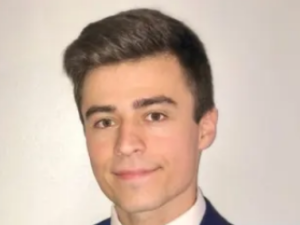
Armin Muzafirović is an ophthalmic technician, motivational speaker, and photographer. He has been a featured speaker at medical conferences and on podcasts, sharing his story of being a heart transplant recipient. Muzafirović earned a BA in biology from the University of Northern Iowa and a master’s degree in biomedical sciences from Iowa State University.
Can you describe your occupation, including your title, industry, duties, and the impact that your actions have in your field?
Currently, I work as an ophthalmic technician while applying to programs to become a physician assistant. As an ophthalmic technician, I assist providers at an eye clinic with intravitreal injections and minor in-office procedures. Outside of work, I volunteer at a hospital and for my local Organ Procurement Organization (OPO) as an event assistant. Additionally, I’m a heart transplant recipient, so I volunteer as a public speaker. I’ve utilized social media as a tool to brand myself and showcase my own medical journey, an effort that has allowed me to branch into public speaking, podcasts, and blogs.
How did you get your start in your industry?
As an undergraduate student in college, I started out as a pharmacy technician for both retail and inpatient pharmacies. After completing my graduate education, I began working as an ophthalmic technician, gaining more experience in the healthcare industry. Ultimately, I plan to become an advanced practice provider after attending PA school.
My desire to work in healthcare was shaped by my experience undergoing heart transplant surgery. As a patient, I had the opportunity to learn about my health while receiving world-class care from renowned medical professionals at the University of Iowa Hospitals and Clinics. This experience led me to become a public figure in organ donation and transplantation, and my story has been shared globally across various podcasts and blogs.
Beyond healthcare, I enjoy photography, so much so that I’ve captured thousands of images while traveling to Bosnia, Croatia, and Slovenia. What began as a hobby grew into a way I can connect with others, sharing the things I saw through my camera’s viewfinder. After grossing over 100,000 views online, several of my most popular images have been featured in diaspora blogs and magazines. Photography became a way to share what words could not express!
What steps have you taken over the years to advance in your industry?
Since I’m in the beginning stages of my career, the steps that I’ve taken are related to education. I earned both an undergraduate and graduate degree. During my undergraduate years, unexpected setbacks occurred with my health, but I worked hard to overcome those hurdles and come back stronger and wiser. After a two-year hiatus I needed to recover from my transplant, I returned to complete my undergraduate degree in better health than I began.
I utilized this second chance at life to take chances and step out of my comfort zone. I did this by joining the Summer Health Professions Education Program (SHPEP) and by founding a student organization chapter. SHPEP is a summer enrichment program that allowed me to connect with other students sharing a similar passion for medicine. I took what I learned from SHPEP to create a student organization chapter on my campus called the Student Organ Donation Advocates (SODA), hoping to raise awareness about the organ donation and transplant community. As chapter leader, I worked closely with my local OPO and with SODA National to educate and inspire others.
After completing my undergraduate degree, I pursued a master’s degree in biomedical sciences. Earning a master’s degree gave me the strong foundation I need to be a competitive applicant to PA school. Apart from education, I dove into social media and self-branding after my transplant, utilizing online platforms to share my experience, inspire others, and give back to the community. This helped pave the way for me to develop strong connections across various disciplines, including healthcare and community outreach, which ultimately gave me opportunities to be a guest speaker for podcasts, medical conferences, and motivational events.
How has working in your industry strengthened your connection to the Bosnian community?
My travel experiences have strengthened my connection to the Bosnian diaspora. One of my first “official” connections with the diaspora community at large occurred when a friend asked to write a blog post using photographs I took, titling the article, “Roots in Art: Documenting a Bosnian’s Journey.” Over the years, others have reached out to me, asking to publish my images, including the Slavic diaspora magazine Gastarbajter.
Additionally, sharing my story about being a transplant recipient has helped me reach Bosnians across the globe. I’ve had Bosnians in different countries reach out to me, sharing that they appreciated my story and that they had family or friends undergoing similar health issues. I’m glad that my perspective has helped ease the anxiety some may feel about transplantation. Hopefully, my storytelling can provide relief to anyone in our community who’s going through something similar.
What advice do you have for Bosnian-American professionals who want to join your industry?
Similar to any industry, healthcare can be competitive. Developing yourself to become a better person than you were yesterday—spiritually, mentally, emotionally, and physically—means you’re already halfway to success. Additionally, you have to put in real work, knowing the “why” of your goals and actions. And never give up, because you might be closer to success than you think!