Preserving Our Roots: From Scholarship to Motherhood
-
by
Zerina Said
Five years ago, I presented on language retention at the 2021 BAPA Forum as a scholarship recipient. I spoke about “linguistic life expectancy” and how the United States is often described as a graveyard for languages where mother tongues can disappear within just a few generations.
Today, as a member of the BAPA board and a mother, those statistics are no longer slides in a PowerPoint; they’re part of my daily life. I believe that language is an integral part of our identity. Beyond simply identifying as Bosnian, research shows that maintaining one’s native language strengthens cognitive development, deepens cultural connection, and reinforces a sense of belonging. It’s our bridge to heritage, history, and homeland. For me, it’s the bridge to my relatives back home. Without it, I would not be able to speak, share memories, or laugh with them.
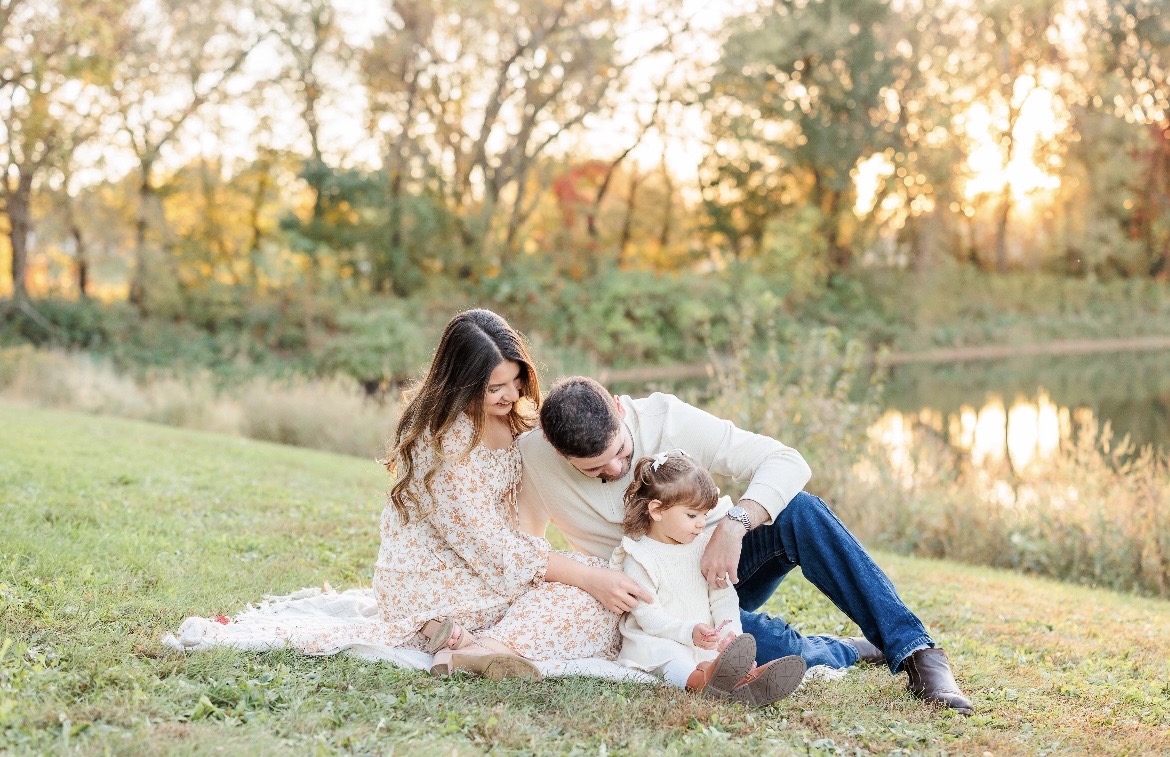
This sense of connection is why my husband and I have emphasized teaching our daughter Bosnian first, even if it means sometimes struggling to express certain ideas in our native tongue. I am currently putting the findings from my presentation to use at home through the Minority Language at Home (MLAH) method with my toddler. We try to surround her with as much Bosnian as possible, knowing that everywhere else she goes, she is exposed to English. While Bosnian is her primary language, I’m amazed at how quickly she has started picking up English, a humbling reminder that without intention, language loss happens quietly and fast.
I would be lying if I said it was easy. I grew up in a Bosnian-only household and consider myself mostly fluent. Yet I still pause over grammar rules, the subtle differences between c, ć, and č (I’m convinced I’ll never fully master this one), and even academic or professional terms. That said, I challenge myself to practice and grow, usually by volunteering to do translations, informal interpreting, and speaking engagements.
With my toddler, this looks like reading English books in Bosnian and interpreting on the spot (or honestly, sometimes making up my own version of the story). For instance, I once confidently sang “Twinkle, Twinkle, Little Star” as “Trepći, trepći, mala zvijezdo,” only to later learn that the more fitting translation is “Blistaj, blistaj, mala zvijezdo.” For a brief moment, I felt guilty for teaching my daughter the wrong version. Then I corrected myself in front of her because I want her to learn that this journey is about persistence, not perfection. Even so, language learning can be unpredictable; despite months of me singing in Bosnian, my daughter prefers to sing the English version but with a Bosnian accent: “kinto, kinto, ittle tar”!
I’ve heard too many stories of people not speaking Bosnian because they were shamed for their accent or grammar, and it breaks my heart. Not speaking takes us to the linguistic graveyard. So what if there is an accent? So what if the grammar isn’t perfect? What matters is that we try and that we keep trying.
Language retention is not automatic; it’s intentional. It lives in bedtime stories translated on the spot, in daily corrections, in community gatherings, and in the courage to try. If we want future generations to carry our language forward, it begins with us choosing to speak it today.
I’ve gathered helpful resources over the last few years for anyone interested in language learning tools:
Bosnian Language and Culture Resources
Practice and Media
- Face TV: Bosnian news and culture site in Bosnian
- Dnevni Avaz: National Bosnian daily newspaper (in Bosnian and English)
- Klix: Popular Bosnian news portal
- Oslobođenje: One of the oldest Bosnian newspapers still in print
- 50Languages: Language learning platform with Bosnian lessons (phrasebooks and audio)
Learning Tools
- Learn Bosnian: Free online Bosnian grammar practice
- Tako Lako: Online Bosnian school for kids
- Learn Bosnian (iLanguages): Free online Bosnian vocabulary and grammar
- LinGo Play Bosnian: App for Bosnian vocabulary and practice
- Naš jezik: Open digital Bosnian/Croatian/Serbian learning materials from Columbia University
Early Literacy
- Bus Ride to Nana and Dido’s House by Nidzara Pecenkovic: A heartwarming bilingual book that introduces everyday Bosnian vocabulary in a family-centered context
- My First Bosnian Alphabet by Neira Pekmez: A beginner-friendly alphabet book designed to build early literacy skills
- Bright Lingo Press: Publisher specializing in bilingual children’s books
- Lingo Dingo Series: Playful bilingual stories that support vocabulary development
- Malik Books: Sarajevo-based publisher offering high-quality Bosnian children’s literature and translations
Community and Daily Practice
- Attend local Bosnian community events, džemats, and cultural gatherings
- Find a language partner for conversational practice
- Choose one daily routine (mealtime, bedtime, car rides) to use only Bosnian
- Replace one English word per day with its Bosnian equivalent to build vocabulary naturally